This year I drew one small thing every day. Some took two minutes. Some took two hours. A few were drawn on the back of a receipt in a waiting room, one was drawn by flashlight during a power outage, and at least three were drawn in bed at 11:58 p.m. because I had almost forgotten. But I did not miss a day, and the little stack of sketchbooks on my studio shelf is now one of the things I am proudest of.
Here’s what two hundred tiny drawings taught me. Some of it is about art. Most of it, honestly, is about habits, patience and being kind to yourself on the days when the drawing is not very good.
Why I started
I did not start because I am disciplined. I started because I was stuck. After finishing a long picture-book project last winter, I felt empty. Every time I opened a fresh page, I wanted the drawing to be important. It had to be portfolio-worthy, or client-ready, or at least something I could post. So I drew nothing at all for almost three weeks.
One morning, I made a rule for myself: draw one thing, any size, every day. It did not have to be good. It did not have to be finished. It did not have to be shown to anyone. The only rule was that the page could not stay empty. I bought a pocket sketchbook with square pages about the size of my palm, so even a “big” drawing would still be small, and I kept it in my coat pocket with one pen.
That tiny page turned out to be the whole trick.
Small is sustainable
A drawing the size of a stamp still counts. The habit matters more than the size. On busy days, a stamp-sized drawing of a teacup took ninety seconds and still kept the streak going. On slow Sundays, I filled a whole spread with a crowded farmers market scene and lost track of time.
What I noticed after the first month was that the small drawings made the big ones easier. My hand got looser. I stopped erasing so much. I made decisions faster, because on a two-inch page you do not have room to second-guess every line. And because nothing felt precious, I tried things I would never risk on client work: a new pen, a weird perspective, a drawing done entirely with dots.
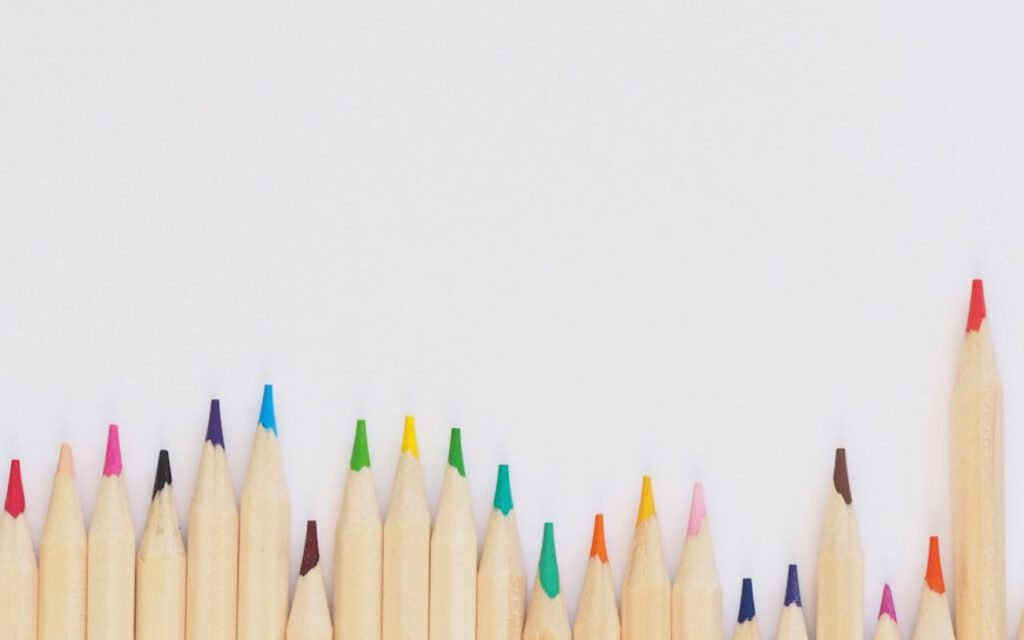
Here is the little setup that kept me going:
- A pocket sketchbook small enough to carry everywhere
- One fine black pen clipped to the cover, so I never had to search for it
- A tiny set of colored pencils for days I felt like adding a splash of color
- A sticky note inside the cover with today’s page number
- No eraser at all. That one was a deliberate choice.
Draw what’s near
My coffee cup, my cat, the bus stop. Ordinary things are the best practice. In the beginning, I thought I would need ideas, a list of prompts or a theme for each week. I never used them. The world around me was more than enough.
My cat, Biscuit, appears on at least forty pages. She is a patient model when she is asleep and a terrible one when she is awake. The mug I drink coffee from every morning shows up eleven times, and you can see my drawings of it get better: the ellipse of the rim goes from wobbly to confident, and by the end the shadows actually look like they belong on a kitchen table.

Drawing what is near also changed the way I walk around my neighborhood. I notice things now. The bus stop at the corner has a bench with one slat painted a different shade of green. The bakery puts its day-old bread in a basket by the door at exactly 4 p.m. These details would never make it into a portfolio, but they live in my sketchbooks, and they feed my client work in quiet ways.
Draw every day, and one day the drawings start drawing you.
Pip
I wrote that line on the inside cover of the fourth sketchbook, around day ninety, and I still believe it. By then, I was not deciding what to draw so much as noticing what wanted to be drawn.
The days that were hard
I would be lying if I said every day was joyful. There were days I was sick, days I was traveling and days I was simply tired of drawing, which is a strange thing to feel when drawing is your job. On those days, I gave myself permission to draw something truly tiny and truly bad. A circle with a stem was an apple. A rectangle with two lines was my phone. It counted.
What helped most:
- Lower the bar on bad days. A two-minute scribble keeps the streak alive, and the streak is what builds the habit.
- Draw at the same time when you can. For me, it was with my first cup of coffee.
- Do not compare pages. Day 150 is not “better” than day 30 in every way. It is just different.
- Do not post everything. Most of my drawings were never shared, and that freedom mattered.
- Forgive a missed day. I did not miss one, but I decided early that a missed day would not end the project.
That last point surprised people when I mentioned it. But knowing I would not “fail” if I skipped a day took away a lot of pressure, and the pressure was what had kept me stuck in the first place.

What changed in my work
The biggest change was speed. When a client asks for a quick round of sketches now, I can produce ten loose ideas in the time it used to take me to make three careful ones. The second change was confidence. After two hundred days of drawing without an eraser, I trust my first line more. I still revise, but I revise less out of fear.
And a few of those small drawings grew up. A tiny sketch of a dog waiting outside the hardware store became the main character of a new picture-book pitch. A doodle of my neighbor’s tomato plants turned into a pattern for a packaging project. None of that was the goal. It just happened because the pages were there.
Key takeaway: make the daily goal so small you cannot talk yourself out of it. The size of the drawing does not matter. The showing up does.
Try it with me
If you have been stuck, or you have always wanted to draw but felt you were not “good enough,” try a small daily page for one month. Pick a sketchbook small enough to carry, one pen you like and the nearest ordinary thing. Draw it. Close the book. Do it again tomorrow.
If you want company, find a friend to do it with you. Two of my illustrator friends joined me in the spring, and we started a tiny group chat where each of us posted one drawing a day, no comments required. Some days the only message was a blurry photo of a stapler. It did not matter. Knowing someone else was showing up made it easier for me to show up too, and seeing how differently three people draw the same ordinary week was its own kind of lesson. One friend draws everything in thick, confident brush pen. The other fills every corner of the page with tiny patterns. I learned more from watching them than from any tutorial I have ever bookmarked.
I am going to keep going, at least until the end of the year. Two hundred down, and a whole lot of coffee cups to go.
Thanks for explaining this so clearly.
Great reporting — please keep following this story.